Home / Films / 01
Full documentary · 37 min
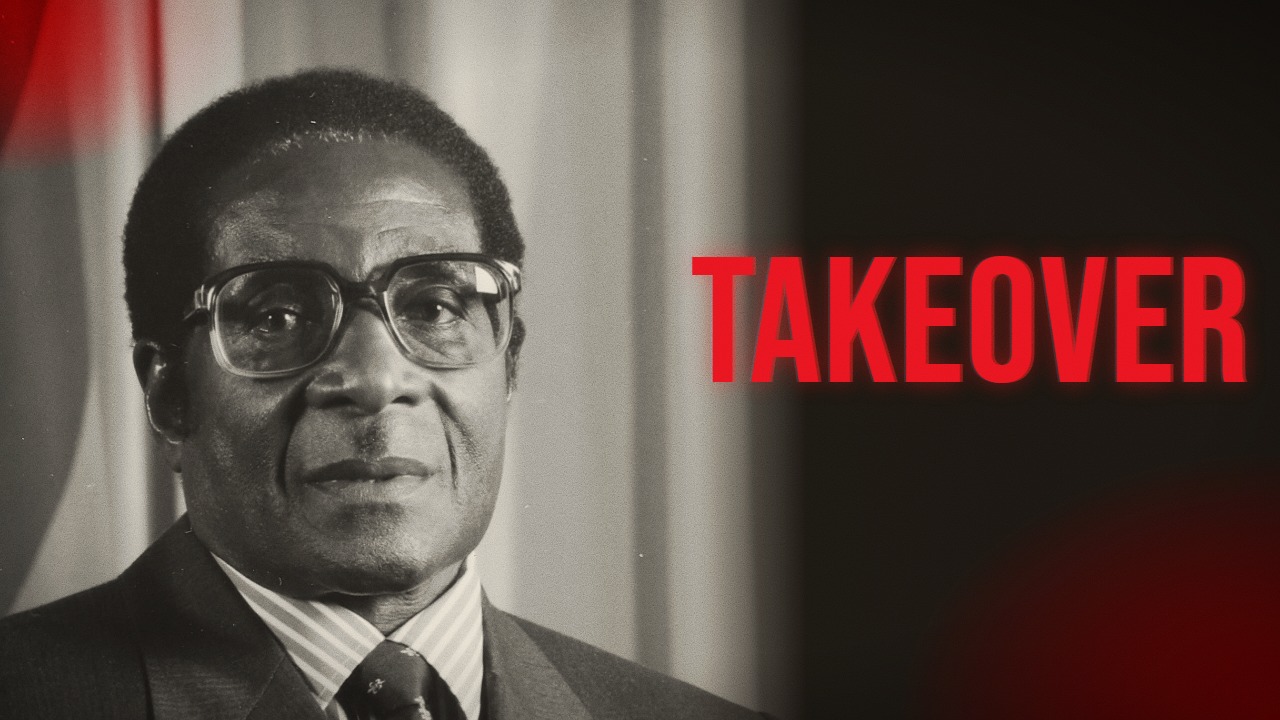
How Did Robert Mugabe Take Over ZANU?
About the film
In November 1974, inside Que Que prison in Rhodesia, the leaders of ZANU voted to remove their own president, Ndabaningi Sithole. One man in the room did not vote. Within three years Robert Mugabe led the party, and he would lead it for the next four decades.
This is the full story of how a schoolteacher with no army took over the Zimbabwe African National Union, today ZANU-PF: the 1963 split with Joshua Nkomo, ten years in detention, the prison coup, the killing of Herbert Chitepo, the guerrilla camps that chose him, and the party he built, up to the coup that ended his rule in 2017.
Sources
- 1David Martin & Phyllis Johnson, The Struggle for Zimbabwe (1981)
- 2David Smith & Colin Simpson, Mugabe (1981)
- 3Maurice Nyagumbo, With the People (1980)
- 4Edgar Tekere, A Lifetime of Struggle (2007)
- 5Fay Chung, Re-living the Second Chimurenga (2006)
- 6Robert Cary & Diana Mitchell, African Nationalist Leaders in Rhodesia (1977)
- 7Ian Smith, The Great Betrayal (1997)
- 8CCJP & Legal Resources Foundation, Breaking the Silence (1997)
How this film was checked
Every fact the narrator states is tied to a source we have read. Every number says who counted it. Both sides' accounts are recorded.
Corrections
None so far. If something is wrong, write to hello@padaremedia.com and say where in the film.
Photographs, film and maps
- Sithole in Wellesley, 1955: Dean Newman, CC BY-SA 4.0
- Fort Hare: Lysippos, CC BY-SA 3.0
- Kutama College: Marshall tanaka, CC BY-SA 4.0
- Jameson Avenue, Salisbury, 1970s: Rob from United Kingdom, CC BY 2.0
- Dawn in Highfield: Achitate, CC BY-SA 4.0
- Mugabe and Tekere in Bucharest, 1976 and 1979: Fototeca online a comunismului românesc (Arhivele Naționale ale României / IICCMER)
- Kwame Nkrumah; Dar es Salaam airport, 1961: The National Archives (UK), Open Government Licence v1.0
- George Thomson, 1973: © European Union, photo Jean-Louis Debaize, CC BY 4.0
- Seretse Khama, 1977: © European Communities, photo Louis C. D. Joos, CC BY 4.0
- Lisbon, 25 April 1974: Centro de Documentação 25 de Abril, CC BY 4.0
- FRELIMO fighters: unknown author, CC BY 4.0
- Palais des Nations: Yann Forget, CC BY-SA 3.0
- Mugabe receives New Zealand's gift, 1980: Archives New Zealand, CC BY 2.0
- Kim Il Sung, 1972: Ahmadaraj, CC BY-SA 4.0
- Morgan Tsvangirai, 2009: Harry Wad, CC BY-SA 3.0
- Sibusiso Moyo, 2018: Chatham House, CC BY 2.0
- Constantino Chiwenga, 2018: President's Secretariat, Government of India (GODL-India)
- Mugabe, 2015: Press Service of the President of Russia, CC BY 4.0
- Rhodesia film, late 1950s: Tom Chattaway, courtesy Alan Chattaway, CC BY
- Satellite maps: Sentinel-2 cloudless by EOX IT Services GmbH (contains modified Copernicus Sentinel data 2016), CC BY 4.0
- Map data: © OpenStreetMap contributors (ODbL); geoBoundaries (CC BY 3.0 IGO); Natural Earth; NASA Blue Marble
- Public domain and CC0 photographs courtesy of Nationaal Archief / Anefo, the U.S. National Archives, the White House, the U.S. Department of Defense, Voice of America and Wikimedia Commons.
- Portraits of Sithole, Takawira, Malianga, Chitepo, Tongogara, Nkala and Nyagumbo are archive press and book photographs, used for commentary and education where no free photograph exists.